

The modern food system wasn't designed with your health in mind. Here's how to navigate it anyway.
We are living in two food worlds at once. One is full of genuinely good options: cleaner labels, better ingredients, brands built by people who actually care what goes into the bottle. The other is a toxic food environment where ultra-processed products have become experts at impersonating the healthy choice. Most of us are navigating both every single day.
Dr. Chris van Tulleken made that gap impossible to ignore. The Oxford-trained infectious diseases doctor and author of Ultra-Processed People spent a month eating a diet that was 80% ultra-processed food. He gained nearly 15 pounds, experienced gut microbiome disruption, low mood, poor sleep, and brain scan changes in the neural pathways tied to addiction and reward. On the ZOE Science & Nutrition podcast, his test for identifying a UPF was simple: one ingredient you wouldn't use at home means the whole product qualifies.
Understanding that is where real wellness begins.
The Food System: A Brief, Uncomfortable Truth

Here's a number worth sitting with: 55% of the calories American adults consume daily come from ultra-processed foods. For children and teenagers, that figure rises to nearly 62%.
These aren't just junk foods. They're industrially manufactured products made with ingredients you'd never use at home: artificial colors, emulsifiers, flavor enhancers, and chemically modified fats. The health data is sobering. A 2024 review of 45 meta-analyses covering nearly 10 million participants found convincing evidence that a diet high in ultra-processed foods increases the risk of cardiovascular disease death by 50%, obesity by 55%, and Type 2 diabetes by 40%. More about that here from Stanford Medicine.
As the ZOE podcast episode with Dr. van Tulleken and Professor Tim Spector explored, these products aren't accidentally addictive. Food companies have spent decades optimizing formulas year after year until everything from breakfast cereal to frozen lasagna becomes nearly impossible to stop eating. It's not a lack of willpower. It's engineering.
The individual ingredients inside these products tell their own troubling story. Emulsifiers widely used in food manufacturing can disrupt the gut microbiome and weaken the intestinal barrier, creating the conditions for chronic inflammation. Artificial dyes are increasingly under scrutiny too. Red No. 40, Yellow No. 5, and Yellow No. 6, which together account for 90% of food dyes used in the U.S., have been linked to behavioral difficulties in children including inattentiveness, impaired memory, and restlessness. The EU requires warning labels on any product containing these three dyes. The U.S. does not. When we consistently feed our bodies industrial chemicals instead of real food, the body keeps score.
The Seed Oil Story: No More Nuance

Few topics generate more heat in wellness circles than the so-called "Hateful Eight" seed oils, a term coined by physician and researcher Dr. Cate Shanahan. The eight are canola, corn, cottonseed, soy, sunflower, safflower, grapeseed, and rice bran. The average American gets 80% of their fat calories from these eight oils, making them the single largest source of calories in most people's diets. And these toxic oils are in nearly everything: salad dressings, crackers, protein bars, sauces, and snacks that market themselves as healthy.
The core problem is what these oils do to the body over time. People now consume approximately 15 times more omega-6s than omega-3s, compared to the roughly equal ratio humans historically maintained. Omega-3s are anti-inflammatory. Omega-6s, consumed in this kind of excess, tip the body toward chronic inflammation - the same low-grade, persistent inflammation linked to heart disease, metabolic dysfunction, joint pain, and accelerated aging.
Beyond the omega imbalance, these oils contain unstable fatty acids that can break down into toxins during the harsh factory refining process, which also strips away protective nutrients including vitamins and minerals. The result is a fat that is nutritionally empty, chemically altered, and deeply embedded in the food supply.
Your pantry deserves better. And it starts with what you cook with.
Practical Swaps That Actually Stick
Holistic nutritionist Kelly LeVeque has always championed a simple philosophy: focus on what
you're adding, not what you're taking away. Her Fab Four framework of protein, fat, fiber, and greens is built on the idea that when you build genuinely nourishing meals, the processed stuff naturally gets crowded out. No white-knuckling required.
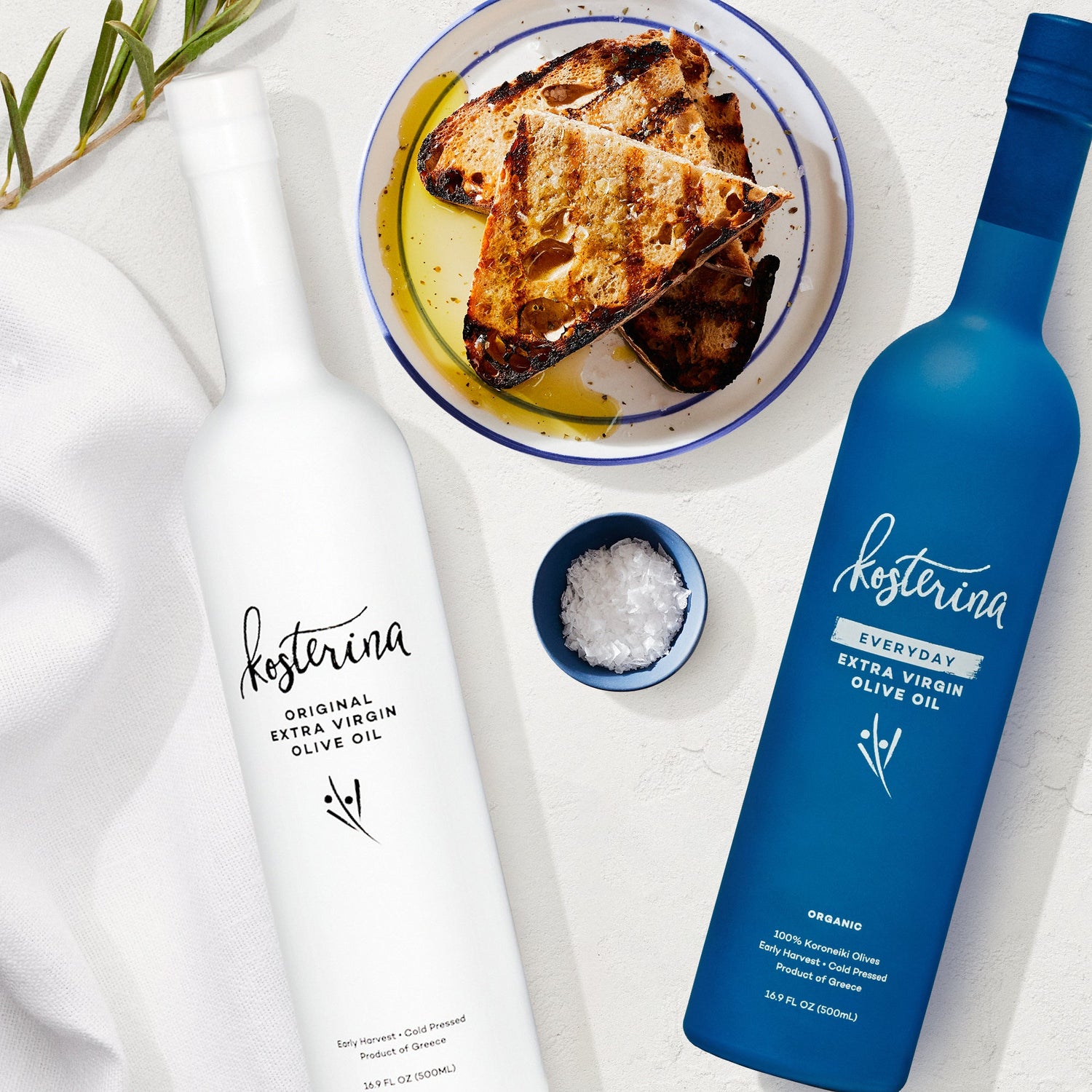
Swap your cooking oil. The single highest-impact pantry change you can make. Do not believe the myth that you cannot cook with olive oil – EVOO is actually the safest oil to be cooking with. (Hint: It’s not about smoke point – more important is the level of free radicals emitted when temperature is applied). Compared with other dietary fats, EVOO is superior in managing blood pressure, LDL cholesterol, and protective HDL cholesterol. Its polyphenols fight inflammation and support gut health across decades of research. Kosterina EVOO, made from early-harvest Greek olives, is among the highest-polyphenol options available.
Read the ingredient list, not the nutrition label. Front-of-package health claims don't tell the whole story. Dr. van Tulleken's rule: if it contains even one ingredient you wouldn't cook with at home, such as an emulsifier, artificial color, or non-nutritive sweetener, it's ultra-processed. Short ingredient lists of recognizable whole foods are what you're looking for.
Make your own dressing. Bottled dressings are one of the most common hidden sources of seed oils and added sugars in an otherwise healthy meal. The fix takes 60 seconds: Kosterina EVOO, Kosterina Crushed Fruit Vinegar, a pinch of salt. Done. One of the easiest and most impactful swaps in your week. You can find a few of our favorite salad dressing recipes here.
Rethink your snacks. Even "clean" packaged snacks often contain seed oils and hidden additives. Swap them for nuts, vegetables with hummus, or Kosterina Dry-Packed Snacking Olives: raw, unpasteurized, probiotic-rich, and free from brine and preservatives. Real food, no compromise.
Get enough omega-3s. Correcting the omega-6 to omega-3 imbalance is one of the most important dietary shifts you can make. The easiest sources are salmon, sardines, walnuts, and flaxseed: foods that do double duty as anti-inflammatory and deeply satisfying.
Batch cook once, eat well all week. A tray of roasted vegetables and a protein in the fridge means you're far less likely to reach for something from a box. Sheet-pan vegetables with a drizzle of Kosterina EVOO takes 25 minutes and provides three days of nourishing meals.
The Kosterina Philosophy

At Kosterina, we've always believed the best antidote to a toxic food environment is food that's genuinely worth eating. Not a list of restrictions, but a table full of things that taste extraordinary and happen to be deeply good for you.
That starts with our early-harvest, cold-pressed EVOO, rich in polyphenols and oleocanthal, with flavor that makes simple food feel special. It extends to our Crushed Fruit Vinegars, a far more delicious way to get the blood sugar and gut health benefits of daily vinegar. And our Dry-Packed Snacking Olives, handpicked in southern Greece, naturally cured, probiotic-rich, and completely free from preservatives, are proof that the best snack is one you can feel good about eating.
The food system is complicated. Eating well doesn't have to be. That's the Kosterina way.
Peace, Love & EVOO,
Katina and The Kosterina Team